
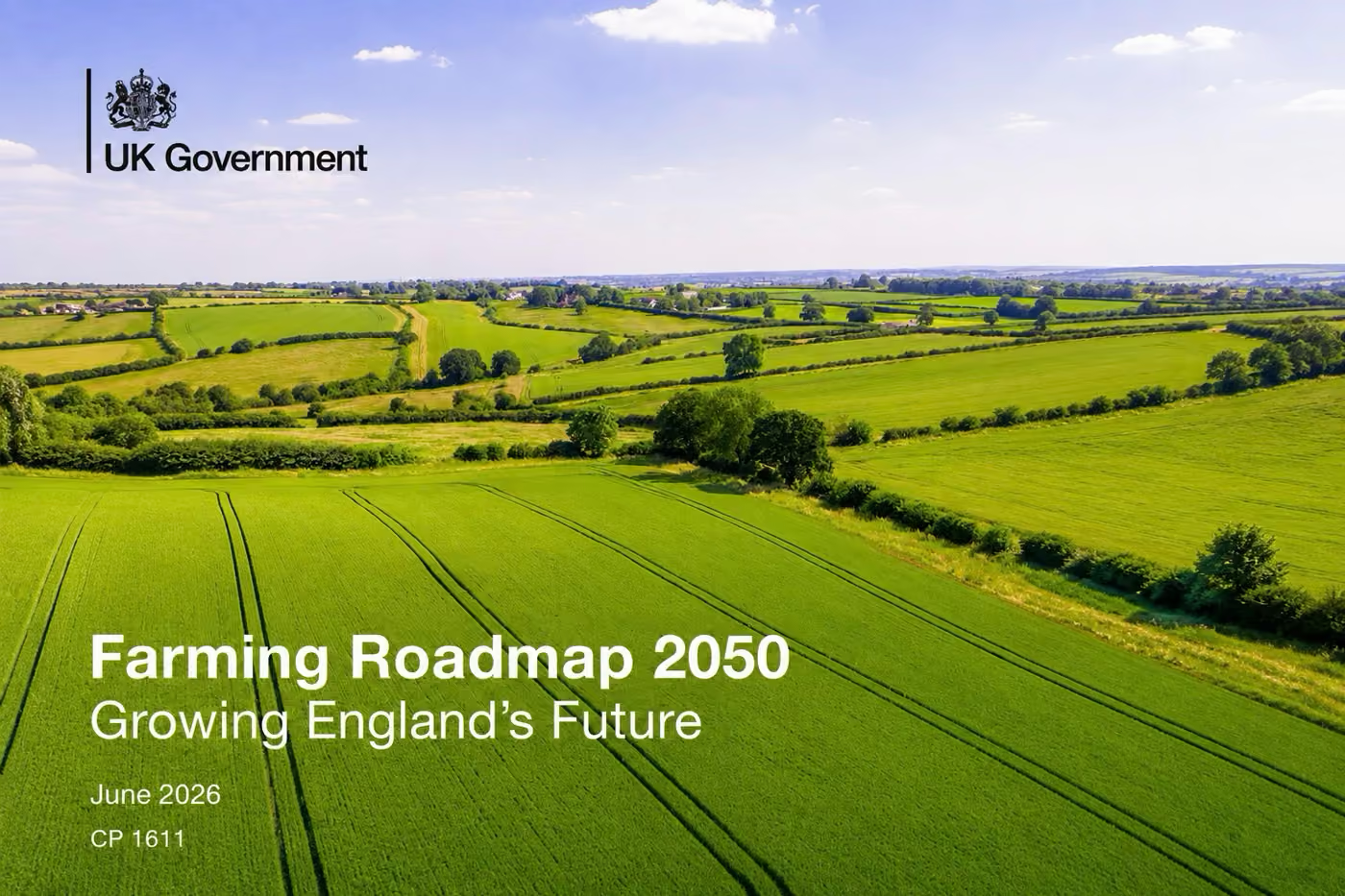
What Does the Farming Roadmap 2050 Really Mean for Farmers?
When Defra published its Farming Roadmap 2050, many people expected it to be another document telling farmers what they should stop doing.
Instead, what emerges is a far more balanced vision for the future of British agriculture.
At its heart is a simple message: continue producing food, but do it in a way that is more productive, more resilient and better suited to the land you're farming.
The right land for the right purpose
Perhaps the most refreshing aspect of the Roadmap is that it recognises there is no single blueprint for every farm.
Rather than promoting one type of farming over another, the Government is encouraging farmers to use land for what it is naturally best suited to. Productive arable land should continue producing crops, while livestock systems, environmental improvements and other complementary enterprises should all play to the strengths of the landscape.
For many farmers, this won't mean wholesale change. It will mean making thoughtful decisions that improve both productivity and long-term sustainability.
Productivity doesn't just mean producing more
For years, productivity has often been measured simply by tonnes per hectare or litres per cow.
The Roadmap takes a broader view.
A productive farm is one that uses its land, labour and capital efficiently, reducing unnecessary costs while maintaining or improving outputs. Sometimes that will come through better technology, improved management or precision farming. Other times it may involve introducing complementary income streams or environmental projects where they make commercial sense.
Ultimately, productivity is about creating a stronger business rather than simply producing more.
Collaboration is becoming just as important as efficiency
One of the more interesting themes within the Roadmap is the recognition that farming businesses don't have to face today's challenges alone.
Whether it's volatility in commodity prices, rising input costs, labour shortages or changing environmental expectations, collaboration is increasingly seen as part of building a resilient business.
That collaboration can take many forms: sharing machinery, entering contract farming agreements, working with neighbouring farms, benchmarking performance, sharing knowledge or bringing in specialist expertise where it adds value. Equally, the Roadmap recognises the importance of stronger relationships throughout the supply chain, with farmers, processors, retailers and government all playing their part in creating a fairer and more resilient agricultural sector.
For many businesses, working collaboratively isn't about giving up control—it's about gaining access to greater expertise, improved efficiency and opportunities that would be difficult to achieve alone.
A resilient farm business
One of the strongest themes running through the document is resilience.
The past few years have shown just how quickly farmers can be affected by extreme weather, fluctuating input prices, geopolitical events and market volatility.
Building resilience means planning ahead, managing risk and ensuring the business is capable of adapting when circumstances change. That might involve improving soils, investing in technology, collaborating with others or developing additional income streams that complement the farming operation.
The Roadmap also highlights diversification, collaboration and better business planning as important tools in helping farm businesses remain resilient in an increasingly uncertain world.
Better environmental performance supports better farming
The Roadmap also moves away from presenting food production and environmental management as competing priorities.
Instead, it argues that healthy soils, cleaner water, improved biodiversity and lower emissions are all fundamental to maintaining productive farms over the long term.
Practices that improve soil health can reduce fertiliser requirements. Better grazing management can improve animal performance while enhancing grassland. Precision technology can reduce both costs and emissions.
Good environmental management is increasingly being recognised as good business management.
Animal health and welfare remain central
Despite some of the headlines surrounding the future of agriculture, the Roadmap is not calling for livestock farming to disappear.
Instead, it recognises that healthy, well-managed livestock systems remain an essential part of British food production. Improving animal health and welfare, reducing disease and increasing efficiency all contribute to stronger, more profitable businesses while helping reduce environmental impact.
Looking ahead
Perhaps the biggest takeaway from the Farming Roadmap 2050 is that farming isn't being asked to become something completely different.
It is being encouraged to become more efficient, more collaborative, more resilient and more adaptable, while continuing to do what it has always done best, producing high-quality food.
For businesses like ours at Windmill Farming, that philosophy feels entirely familiar.
Successful farming has never stood still. It has always evolved with changing markets, new technology and the needs of society. The challenge isn't choosing between food production and sustainability; it's about bringing together the right people, the right knowledge and the right farming systems to strengthen both.
Whether that's making better use of the land, embracing new technology, collaborating with neighbouring businesses or developing farming partnerships, the future belongs to businesses that are prepared to adapt while keeping food production at the heart of everything they do.
The future of farming isn't about abandoning traditional agriculture. It's about ensuring our farms are productive, profitable, environmentally responsible and resilient enough to thrive for generations to come.