
Organic farming in England: a new plan for Growth
With the Government aiming to nearly treble England’s organic farmland by 2036, we take a look at the new Organic Action Plan, the opportunities it presents and what it could mean for British farmers.
Organic farming has been part of British agriculture for decades, but despite growing consumer demand for organic produce, the amount of land farmed organically in England has remained relatively unchanged for more than ten years.
That could be about to change.
On 14 October 2026, the Department for Environment, Food and Rural Affairs (Defra) launched its new Organic Action Plan for England, setting out a ten-year strategy to support organic farming, strengthen domestic supply chains and encourage more farmers to consider organic production.
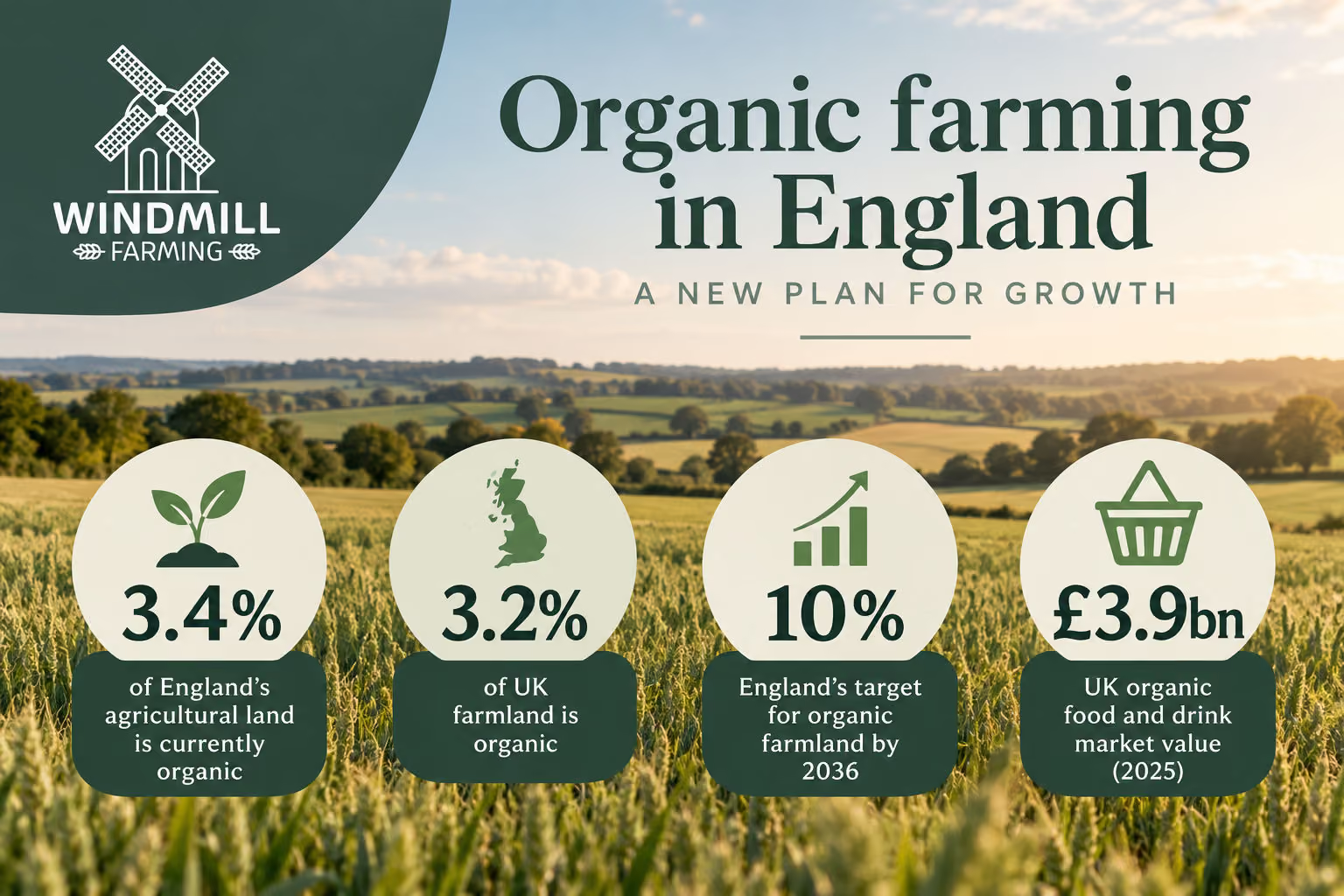
The headline ambition is significant: to increase the proportion of England’s agricultural land managed organically from approximately 3.4% to 10% by 2036.
But what does the plan actually involve, and what opportunities could it create for farmers?
How much of England’s farmland is organic?
Perhaps surprisingly, organic farming still accounts for only a small proportion of England’s agricultural land.
According to Defra, approximately 301,000 hectares of land in England are managed organically or are undergoing conversion, representing around 3.4% of the country’s agricultural area. Although the total UK organic land area increased by 7.3% in 2025, growth in England was much slower at just 1.5%. The area of which has remained between 289,000 and 324,000 hectares since 2012.
Meanwhile, consumer demand continues to grow. UK retail sales of organic food and drink reached £3.9 billion in 2025, with demand increasingly being met by imported products rather than those produced on British farms. This presents an interesting opportunity for the agricultural sector. If domestic production can increase to meet demand, there is potential to strengthen British supply chains and create new markets for farmers.
What does the new Organic Action Plan involve?
Developed jointly by Defra and the English Organic Forum, the plan focuses on three main areas:
1. Supporting farmers and growers
The Government wants to make it easier for existing and prospective organic producers to access information, practical advice and support.
This includes clearer guidance on conversion requirements, access to financial modelling tools, one-to-one advice and opportunities to learn from farmers already operating successful organic businesses.
2. Strengthening British supply chains
A key objective is to close the gap between domestic organic production and consumer demand.
The plan aims to improve connections between farmers, processors, retailers and buyers, identifying opportunities across sectors including horticulture, arable farming, dairy, red meat and poultry.
3. Encouraging demand for British organic produce
Alongside improving consumer awareness, the Government wants to increase the proportion of organic food purchased by public sector organisations.
This could create additional opportunities for British producers supplying schools, hospitals and other public institutions.
What are the benefits of organic farming?
Organic farming is often associated with environmental sustainability, but its potential advantages extend beyond simply reducing the use of artificial fertilisers and pesticides.
Research highlighted in the Government’s action plan identifies several benefits.
Improved soil health: Organic farming systems typically use crop rotations, legumes, organic matter and other natural methods to maintain soil fertility. These practices can improve soil structure, support soil organisms and help retain carbon.
Greater biodiversity: Reduced reliance on synthetic pesticides, combined with diverse rotations and habitats, can support a wider range of wildlife, including pollinators, birds and beneficial insects.
Improved water quality: Reducing synthetic fertiliser and pesticide use can help limit certain forms of agricultural pollution, supporting healthier rivers and waterways.
Reduced reliance on synthetic inputs: Organic systems can reduce dependence on manufactured nitrogen fertilisers and certain other inputs, although they still require careful nutrient and pest management.
Animal welfare: Organic livestock standards include specific requirements relating to outdoor access, living conditions and husbandry, supporting higher welfare standards.
There may also be commercial benefits. For some businesses, organic certification can provide access to premium markets, opportunities for diversification and stronger relationships with customers interested in how their food is produced.
Is organic farming right for every farm?
While the environmental and commercial opportunities are encouraging, converting to organic production is not without its challenges. The conversion process takes time and requires careful planning. Farmers may face additional costs, changes in crop yields, different management requirements and uncertainty over market returns. Organic farming can also be more labour-intensive, while securing reliable buyers and achieving sufficient premiums for produce are important considerations.
Although the Government’s new plan promises better advice and support, it does not currently commit additional ring-fenced funding specifically for organic conversion. Ultimately, the decision to convert must make financial and practical sense for the individual farm business.
Looking ahead
The new Organic Action Plan represents an ambition to expand organic farming in England over the next decade. However, achieving the target of 10% organic farmland by 2036 will depend on more than encouraging farmers to convert. Reliable markets, appropriate financial support, strong supply chains and consumer demand will all play important roles.
Whether farming organically or conventionally, improving soil health, supporting biodiversity and building resilient farming businesses remain important priorities for the future of British agriculture.
For farmers considering organic conversion, the starting point should be a clear understanding of the opportunities, costs and long-term implications for their business.
At Windmill Farming, we recognise that every farm is different, and that successful farming depends on finding the right balance between productive agriculture, environmental responsibility and long-term commercial sustainability.
You can read the full Organic Action Plan for England on the Government’s website here.