
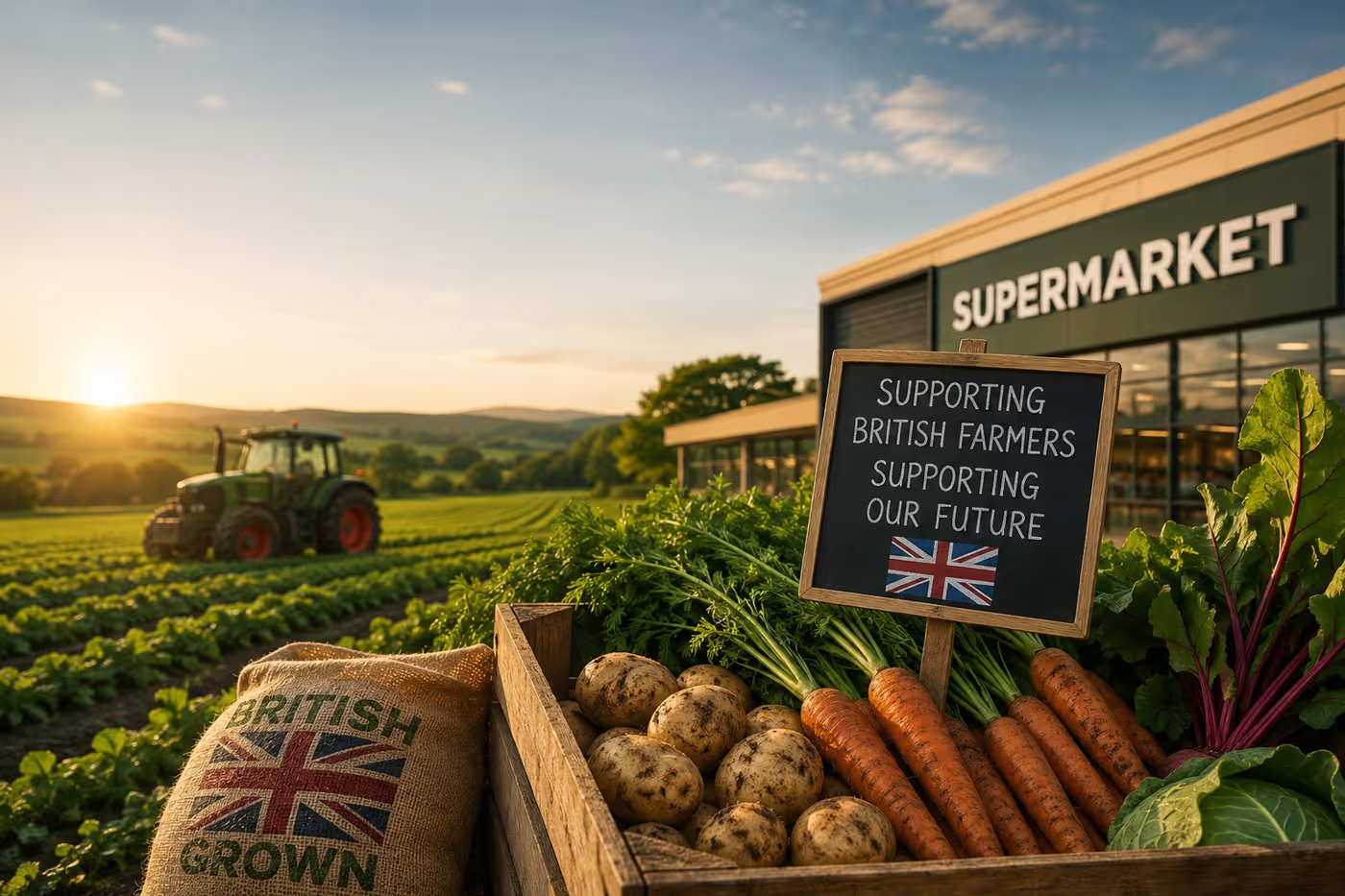
Can Supermarkets Help Save British Farming
For years, British farming has found itself caught in a difficult position.
Farmers are being asked to produce food more sustainably, reduce chemical inputs, improve environmental outcomes, adapt to changing weather patterns and continue supplying high-quality produce, all while operating on increasingly tight margins.
At the same time, consumers quite understandably still expect affordable food and fully stocked supermarket shelves year-round.
Something, eventually, has to give.
That is why recent announcements from supermarkets like Co-op are interesting, not simply because they support British farmers, but because they suggest retailers may finally be starting to adapt to the realities facing modern agriculture.
Recently, Co-op announced it would begin switching some of its potato ranges away from traditional varieties like Maris Piper and towards newer British-grown varieties that are more resilient to disease, changing weather conditions and lower-input farming systems.
On the surface, it might sound like a relatively small change. In reality, it reflects a much bigger conversation happening across UK agriculture.
Farming Has Changed but Retail Expectations Often Haven’t
Many of the crop varieties farmers still grow today were bred decades ago for a very different farming environment.
- The climate was more predictable.
- Input costs were lower.
- Disease pressures were different.
- Expectations around sustainability looked nothing like they do today.
Now, growers are dealing with wetter winters, hotter summers, rising input costs and increasing pressure to reduce fertiliser and pesticide use, all while still being expected to deliver perfect-looking produce consistently and at low prices.
For potato growers especially, recent seasons have been incredibly challenging.
Wet harvesting conditions, variable yields and increasing disease pressure have made consistency much harder to achieve. Some traditional varieties simply no longer perform reliably enough in UK conditions throughout the entire season.
What Co-op appears to be recognising is that supporting British farming may require more than simply putting a Union Jack on packaging. It may mean adapting specifications, embracing newer crop varieties and allowing growers greater flexibility.
That matters.
Could Supermarkets Become Part of the Solution?
There are signs that some retailers are beginning to think more long term.
Tesco has been involved in projects looking at lower-carbon potato production and climate-resilient growing systems. Other retailers have trialled support packages, longer-term agreements and more flexible specifications to help growers manage risk.
These kinds of changes can make a real difference.
When retailers commit to British supply chains and work collaboratively with growers, farmers gain greater confidence to invest in:
- new varieties
- improved storage
- technology
- regenerative practices
- environmental schemes
- long-term business planning
The reality is that farmers can adapt remarkably well when they have certainty.
The challenge is that uncertainty has become one of the biggest pressures facing the industry.
But Supermarkets Alone Cannot Carry the Burden
While retailer support is welcome, it would be unrealistic to suggest supermarkets alone can “save” British farming.
Many farmers would argue the industry still needs clearer long-term government policy around food security, environmental payments and investment support.
There is also the issue of pricing.
Farmers cannot continue absorbing rising costs indefinitely while supermarkets compete heavily on cheap food pricing. British agriculture remains one of the most efficient and highly regulated food production systems in the world, but resilience becomes difficult when profitability disappears.
That is why this conversation matters.
If the UK genuinely wants a secure domestic food supply, then responsibility cannot sit solely with farmers. It requires collaboration across the entire supply chain:
- retailers
- policymakers
- processors
- consumers
- and farming businesses themselves.
A More Realistic Future for British Farming?
Perhaps the most encouraging part of the Co-op announcement is not actually the potato varieties themselves. It is the recognition that agriculture is changing, and that supply chains may need to change alongside it. Consumers may gradually need to become more accepting of seasonal variation, different varieties and produce that doesn’t always look identical year-round. Retailers may need to continue adapting specifications to reflect real growing conditions.
And farmers will continue doing what they have always done best: adapting.
British farming has never stood still. The sector has constantly evolved through changing markets, weather, technology and policy. The real question now is whether the wider food system is prepared to evolve with it. Because supporting British farming in the future may not simply be about buying British. It may be about fundamentally rethinking how British food is produced, valued and supported in the first place.